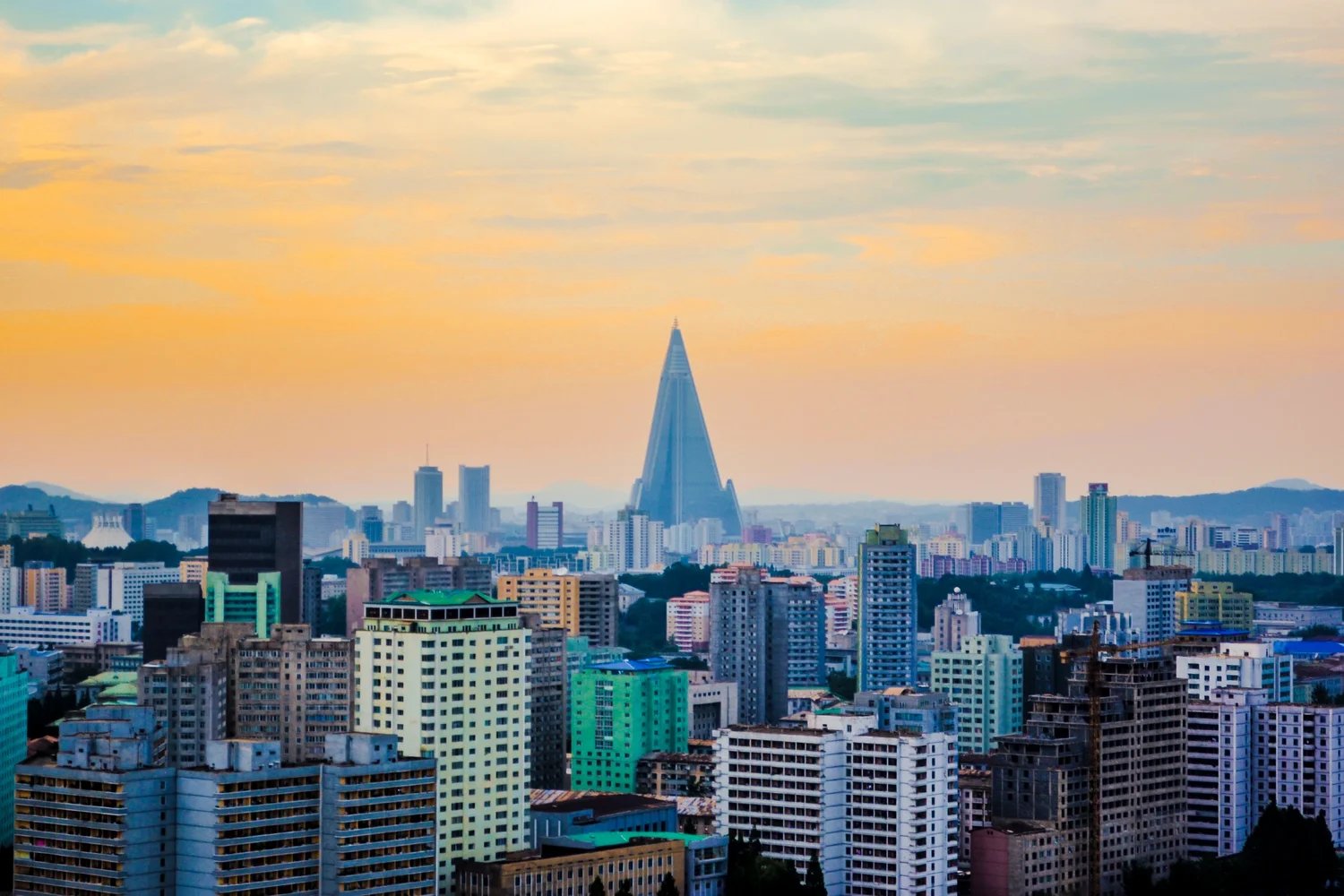
Pyongyang, North Korea

🇰🇵 Pyongyang, North Korea


6:1418:53
100 USD = 90000 KPW
+850
Safety: Avoid all travel

Forecast by:
11 Sep
Fri
12 Sep
Sat
13 Sep
Sun
14 Sep
Mon
15 Sep
Tue
16 Sep
Wed
17 Sep
Thu
Temp (°C)26°
14°
28°
15°
27°
18°
25°
17°
25°
14°
28°
14°
28°
16°
Precipitation2%2%6%2%4%2%2%
Humidity79%77%79%77%77%77%68%
Wind12 km/h10 km/h13 km/h17 km/h6 km/h5 km/h7 km/h

Best time to visit Pyongyang

The best time to visit Pyongyang is April to October, when conditions are generally mild to warm and suitable for sightseeing. June to August are hot and humid, with monsoon rain and flooding risk, while April, May and October offer more comfortable conditions. November to March is colder and generally less suitable for extended outdoor visits.

JanuaryOKTemp (°C)-7°Rain (mm)4Sun Hours6Dry Days23

January is bitterly cold and dry, around -13°C to -3°C. Sightseeing requires proper winter clothing.

FebruaryOKTemp (°C)-3°Rain (mm)10Sun Hours6Dry Days22

February is wintry and dry, around -11°C to 0°C. Outdoor visits can be uncomfortable without substantial cold-weather clothing.

MarchOKTemp (°C)Rain (mm)11Sun Hours9Dry Days24

March is chilly and dry, around -4°C to 8°C. Brisk conditions suit determined city sightseeing, but winter clothing remains useful.

AprilGreatTemp (°C)10°Rain (mm)19Sun Hours10Dry Days21

April is mild and generally comfortable for exploring Pyongyang, around 4°C to 16°C. Cool mornings call for an extra layer.

MayGreatTemp (°C)16°Rain (mm)28Sun Hours10Dry Days22

May is mild to warm, around 10°C to 26°C, with comfortable conditions for walking and outdoor sightseeing.

JuneGreatTemp (°C)20°Rain (mm)43Sun Hours10Dry Days18

June is warm and humid, around 18°C to 28°C, with rainfall beginning to increase. Plan outdoor visits around occasional wet spells.

JulyGreatTemp (°C)24°Rain (mm)134Sun Hours8Dry Days14

July is hot and humid, around 21°C to 30°C, with monsoon rain, flooding risk and humid nights. Heavy showers can disrupt outdoor plans.

AugustGreatTemp (°C)24°Rain (mm)82Sun Hours10Dry Days16

August is hot and humid, around 20°C to 29°C, with concentrated monsoon rain, flooding risk and humid nights. Allow flexibility for wet conditions.

SeptemberGreatTemp (°C)18°Rain (mm)28Sun Hours10Dry Days21

September is warm, around 14°C to 27°C, with rainfall still possible. Comfortable temperatures support sightseeing, though showers may affect outdoor plans.

OctoberGreatTemp (°C)13°Rain (mm)23Sun Hours6Dry Days25

October is cool and generally suitable for exploring, around 5°C to 18°C. Pack layers for crisp mornings and mild afternoons.

NovemberOKTemp (°C)Rain (mm)25Sun Hours6Dry Days19

November is chilly and dry, around -2°C to 9°C. Layered clothing is needed for outdoor sightseeing, especially in the morning.

DecemberOKTemp (°C)-4°Rain (mm)10Sun Hours6Dry Days21

December is cold and dry, around -9°C to 1°C. Short outdoor visits are manageable with full winter clothing.

Sources: en.wikipedia.org, youngpioneertours.com

Activities are coming soon.

Brief

  • Travel to Pyongyang is generally possible only through an approved organized tour with assigned guides. Independent movement, photography, communication with local people and access to many areas are tightly controlled; itineraries can change without notice.
  • Carry sufficient cash in accepted foreign currencies, as foreign visitors have limited access to local banking and payment systems. Internet and mobile connectivity may be restricted or unavailable.
  • Try Pyongyang-style naengmyeon, a cold buckwheat noodle dish, along with Korean barbecue, kimchi and ginseng tea. Eat and drink only at approved establishments.
  • North Korea’s National Day falls on 9 September. Public ceremonies, parades, heightened security and temporary sightseeing restrictions may affect tour schedules around the holiday.
  • Medical evacuation and transport options are limited, particularly outside the capital. Confirm that travel insurance covers North Korea and emergency evacuation to China.

Safety and health

  • Regional military tensions remain elevated. Missile tests and military activity can lead to sudden itinerary changes, restricted movement or transport disruption, even though launches have generally occurred away from Pyongyang. Follow tour-guide and official instructions closely.
  • North Korean authorities enforce strict rules on photography, political discussion, religious activity, media and possession of foreign materials. Actions that may be harmless elsewhere can result in questioning, detention or expulsion.
  • Drink sealed bottled water only and avoid untreated water and ice. Medical facilities outside Pyongyang may be outdated or sparse, while complex treatment may require evacuation abroad. (wikivoyage.org)
  • A yellow-fever vaccination certificate is required for travellers aged one year or older arriving from countries with a risk of yellow-fever transmission; it is not required for direct travel from the United States. (cdc.gov)

Recent News

  • On 20 August, North Korea launched around 10 short-range ballistic missiles from the Pyongyang area toward the sea, according to South Korean authorities. The launches followed tensions surrounding US-South Korea military exercises and could contribute to heightened regional alerts or tour disruptions. (npr.org | cbsnews.com)
  • On 12 August, North Korea conducted another ballistic-missile launch toward waters between the Korean Peninsula and Japan, shortly before the annual Ulchi Freedom Shield exercises. (euronews.com | aljazeera.com)
  • North Korea has continued issuing strong warnings about US-South Korea military cooperation, while reporting on possible renewed US-North Korea dialogue has added uncertainty to the regional situation. Travellers should expect political developments to affect access and tour arrangements with little notice. (kelo.com | upi.com)